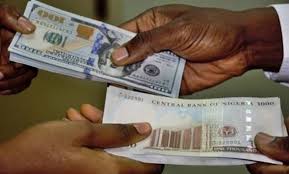
Nigeria’s diaspora remittance inflows may face a serious setback following the passage of a new bill by the United States House of Representatives that proposes a 3.5% tax on all international money transfers made by non-US citizens.
The proposed legislation, titled the One Big Beautiful Bill Act, forms part of former President Donald Trump’s sweeping policy package. If signed into law, it would affect remittances sent by non-citizens, including green card holders and those on temporary visas. The levy would be deducted at the time of transfer and paid quarterly to the US Treasury.
The tax, which includes no exemptions—even for small amounts—is expected to significantly impact remittance-dependent countries like Nigeria. According to the Central Bank of Nigeria (CBN), personal remittances reached $20.93 billion in 2024, the highest in five years. These funds have been vital in bolstering Nigeria’s balance of payments and supporting millions of households.
The Centre for Global Development has identified Nigeria as one of the top 10 countries likely to be most affected by the tax, potentially losing up to $215 million annually in remittance value. Although exact figures for US-originating remittances to Nigeria are unclear, estimates suggest that Nigerians in the US remitted over $6 billion in 2015 alone.
Analysts fear the new tax could discourage formal remittance channels, pushing senders to unregulated informal options. This shift could weaken Nigeria’s foreign reserves and complicate the Central Bank’s efforts to stabilise the naira and control inflation.
The proposed tax comes at a time when the CBN is working to grow formal remittance inflows. Recently, the apex bank launched the Non-Resident Bank Verification Number (NRBVN) platform in partnership with the Nigeria Inter-Bank Settlement System. This initiative allows Nigerians abroad to obtain BVNs remotely and aims to raise monthly remittances to $1 billion.
CBN Governor Olayemi Cardoso expressed optimism about the initiative’s potential, stating, “With the introduction of NRBVN and complementary policy measures, we are optimistic about achieving our ambitious target of $1bn in monthly remittance flows.”
However, financial experts warn that the new US policy could derail those ambitions. Charles Sanni, CEO of Cowry Treasurers Limited, told The Punch that the 3.5% levy could significantly deter diaspora inflows. “This tax will reduce the amount of money that would ordinarily come into Nigeria. It’s a second round of taxation for senders who are already taxed on their income,” he said.
He added that the policy could shift remittances to unofficial channels, further complicating monetary policy and forex stability efforts. Sanni also predicted that the new tax could influence Nigerian investors abroad to redirect their investments to jurisdictions with more favourable tax regimes.
“Diaspora remittances may not be classified as government revenue, but they are essential to our foreign reserves and balance of payments. Reduced inflows will worsen our exchange rate position,” he said.
Sanni warned that the government might be forced to close the forex gap through increased borrowing, new taxes, or asset sales—measures that could increase Nigeria’s debt burden.
He also urged citizens to brace for economic difficulties, especially households that depend on remittances. “This will have ripple effects on disposable income, lead to agitation for wage increases, and possibly fuel inflation,” he said.
Boniface Chizea, CEO of BIC Consultancy Services Limited, echoed these concerns, warning that the policy could hurt Nigeria’s trade balance and encourage black market activity. He emphasised the need to strengthen the oil sector to mitigate potential revenue losses.
Renowned economist Professor Akpan Ekpo added that the policy would not only reduce official remittance flows but also increase reliance on illegal channels. “In a time of economic hardship, this is not a good development. It’s imperative that Nigeria identifies alternative internal revenue sources,” he said.
Similarly, Manuel Orozco, Director of the Migration, Remittances, and Development Program at the Inter-American Dialogue, said the tax could drive more people toward informal and unregulated methods of money transfer, including crypto wallets and shared debit cards. He warned that such shifts could expose the system to money laundering risks and increase pressure on US regulators to respond.
As the bill progresses through the US legislative process, its global implications—particularly for remittance-dependent countries like Nigeria—are becoming increasingly evident. Economists and policymakers alike warn that, if enacted, the new tax could severely disrupt financial lifelines that many households in the developing world rely on.
